Lade Informationen...

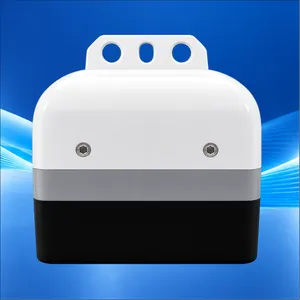
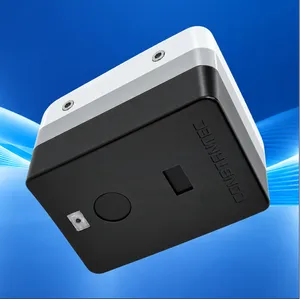
FEED CHECK is a wireless feed inventory management system based on 3D optical scanning technology. Installed at the top of a feed bin, it measures the three-dimensional shape of the feed surface and calculates the remaining feed inventory.
Feed bins used on livestock farms are large, enclosed structures, making it difficult to visually check the amount of feed remaining inside or to identify feed buildup adhering to the inner walls. As a result, both farmers and feed suppliers may have difficulty accurately determining actual feed inventory levels and the appropriate timing for feed replenishment.
Unlike conventional single-pixel, single-point distance measurement systems or mechanically rotating scanning systems, FEED CHECK uses a non-rotating, solid-state 3D ToF LiDAR sensor capable of measuring a 90° wide-angle field of view at a high resolution of 9,600 pixels.
The sensor scans a wide area of the feed surface in approximately 0.01 seconds and uses the acquired 3D shape data to determine feed inventory levels and conditions inside the bin. The measured data, together with temperature and humidity information from the air inside the feed bin, is transmitted to a remote server via LTE-M or NB-IoT, both low-power wide-area communication technologies. The communication method will be selected according to the mobile network infrastructure available in each country.
This allows users to remotely monitor feed inventory levels and consumption status without having to visit the site or physically inspect the inside of the feed bin.
Beyond simple inventory measurement, FEED CHECK can also support feed storage environment and quality management.
If ventilation is insufficient under high-temperature and high-humidity conditions, feed may become moldy or deteriorate. In addition, if feed remains attached to the inner walls of the bin for an extended period and new feed is repeatedly added without the old feed being fully discharged, older feed may become mixed with newly supplied feed.
By monitoring both the temperature and humidity inside the feed bin and the three-dimensional shape of the stored feed, FEED CHECK can help identify changes in storage conditions and detect feed buildup on the bin walls. This information can also help manage the risk of feed quality deterioration caused by material remaining inside the bin for extended periods.
FEED CHECK is designed with ultra-low-power technology, enabling operation for up to five years using only its internal battery. Its LTE-M and NB-IoT low-power wireless communication capabilities also allow feed bins in remote locations to be monitored without requiring a separate wired network infrastructure.
The product is planned to support different communication environments by country. LTE-M will be used in countries where LTE-M networks are widely available, while NB-IoT will be offered in markets where NB-IoT is the primary low-power cellular network.
With FEED CHECK, livestock farmers can manage feed inventory and storage conditions more conveniently, while feed suppliers can manage inventory levels and feed consumption patterns across multiple farms using data.
Based on this information, feed suppliers can forecast feed replenishment timing and optimize production and delivery schedules, helping improve the efficiency of inventory management, logistics, and raw material procurement. In the long term, FEED CHECK can also contribute to the digitalization of the feed supply chain and greater stability in livestock production costs.