Loading...

- Exhibitors
- Products
- Floorplan
- Programme
- Medienpartner
- News
- Show more

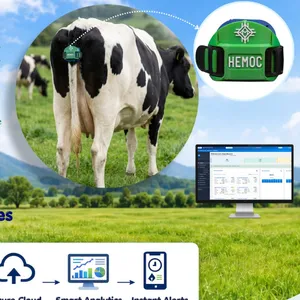
HEMOC®-CH₄ is a smart cattle methane-monitoring solution developed by MagniBiosens for real-time enteric methane sensing and livestock sustainability management. The system is designed to bring methane monitoring closer to the individual animal, enabling farms and researchers to obtain timely information on methane levels rather than relying only on occasional or indirect assessments.
Enteric methane is an important component of livestock emissions, and understanding how methane levels change over time can provide valuable information for sustainability-focused livestock management. HEMOC®-CH₄ is designed to support this requirement through real-time monitoring, creating a continuous stream of methane-related information that can be analysed to understand emission patterns and trends.
A key aspect of the HEMOC®-CH₄ solution is its focus on converting methane measurements into useful information for decision-making. Instead of treating methane sensing simply as a measurement exercise, the platform is positioned to generate emission trend reports that can help users observe changes in methane levels over time. These insights can support the evaluation of livestock-management practices and sustainability initiatives.
The system is particularly relevant for farms, livestock technology companies, researchers and sustainability-focused organisations interested in developing a better understanding of cattle-related methane emissions. Real-time information can provide a more detailed picture of emission behaviour and create a basis for comparing observations across animals, periods or management conditions. This can be valuable when developing and evaluating strategies intended to improve the environmental performance of livestock production.
HEMOC®-CH₄ also incorporates a sustainability and carbon-management perspective. The solution is designed to provide carbon-credit insights alongside methane monitoring and emission trend reporting. This creates a potential pathway from animal-level methane sensing to broader sustainability reporting and carbon-related decision-making.